Table Of Content

The Singleton class maintains a static reference to the lone singleton instance and returns that reference from the static getInstance() method. In Abstract Factory pattern an interface is responsible for creating a factory of related objects without explicitly specifying their classes. Each generated factory can give the objects as per the Factory pattern. There's a myriad of design patterns, and you're probably familiar with some of them already.
Behavioural Design Patterns
As we conclude this comprehensive guide to the Prototype design pattern in Java, we’ve explored its fundamental components, practical applications, and potential benefits in diverse scenarios. Armed with this knowledge, you possess the tools to implement the Prototype pattern effectively in your Java projects. The Prototype pattern can contribute to efficient resource management in scenarios where creating new instances incurs substantial resource costs. This is particularly relevant in resource-intensive applications, such as those involving database connections, network resources, or external services. Another compelling feature of the Prototype pattern is its flexibility in customizing cloned objects based on specific requirements.
Design Patterns Index
When the first filter is resolved, the request goes to the next filter, and so on. Sometimes we care about what kind of sorting we need, but we know that we want to sort. You want to create an object which has many different fields (some mandatory and some optional). Singleton can help us, providing just one instance around your software or system.
Factory Design Pattern Implementation
In summary, implementing design patterns in Java is a powerful tool for solving recurring software design problems, and it helps developers to build maintainable, efficient, and reusable code. The three types of design patterns are creational, structural, and behavioral. Each pattern has a specific set of benefits and drawbacks, and selecting the appropriate design pattern for a given situation is important. Implementing design patterns in Java requires an understanding of the pattern itself and familiarity with Java syntax and programming concepts. By following best practices and guidelines for using design patterns, developers can avoid common mistakes and apply patterns effectively in their projects. Overall, incorporating design patterns into Java programming can help developers write better code and achieve their software development goals.
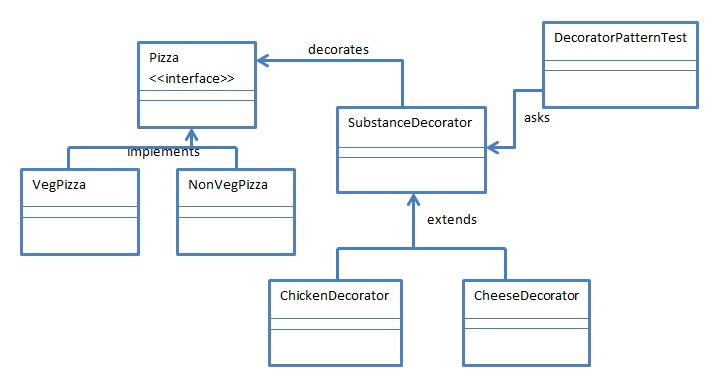
The decorator design pattern is used to modify the functionality of an object at runtime. At the same time, other instances of the same class will not be affected by this, so the individual object gets the modified behavior. We use inheritance or composition to extend the behavior of an object, but this is done at compile-time, and it’s applicable to all the instances of the class.
Builder in Other Languages
The examples provided in this blog post are just the starting point for understanding the patterns. To gain a deeper knowledge of design patterns, consider studying additional resources and examples to expand your understanding and mastery of these powerful tools. The Factory Method pattern defines an interface for creating an object, but the specific class instantiation is deferred to subclasses. The BubbleSortStrategy and QuickSortStrategy classes (concrete strategies) implement the SortingStrategy interface and provide their respective sorting algorithms. The Sorter class (context) contains a reference to a SortingStrategy instance and provides a setStrategy() method to change the strategy at runtime. The sort() method in the Sorter class delegates the sorting task to the currently set strategy.
Welcome to the OOP pattern matching: Visitor Pattern - hackernoon.com
Welcome to the OOP pattern matching: Visitor Pattern.
Posted: Sat, 17 Aug 2019 07:00:00 GMT [source]
Builder is a creational design pattern that lets you construct complex objects step by step. The pattern allows you to…
Also, they rely on the concept of inheritance and interfaces to allow multiple objects or classes to work together and form a single working whole. All those tutorials for beginners java developers (yt, udemy,…) are created usually in which design pattern? On all tutorials which I use, free and bought I never heard any of those teacher that they are mentioned any design pattern.
The Catalog of Java Examples
The Circle class (leaf) extends Graphic and overrides the draw() method. The GraphicGroup class (composite) extends Graphic, overrides the draw() method to draw all its child graphics, and also overrides the add() and remove() methods to manage child components. In the Singleton class, we have a private static instance variable instance. The constructor is marked as private to prevent other classes from creating instances.
Singleton pattern in Java. Full code example in Java with detailed comments and explanation. Singleton is a creational…
9 Clean Code Patterns I wish I knew earlier by Martin Thoma - Towards Data Science
9 Clean Code Patterns I wish I knew earlier by Martin Thoma.
Posted: Sat, 16 Oct 2021 07:00:00 GMT [source]
The idea is to keep the service layer separate from the data access layer. One of the best examples of this pattern is the Collections.sort() method that takes the Comparator parameter. Based on the different implementations of comparator interfaces, the objects are getting sorted in different ways. The composite pattern is used when we have to represent a part-whole hierarchy. When we need to create a structure in a way that the objects in the structure have to be treated the same way, we can apply the composite design pattern. The singleton pattern restricts the instantiation of a Class and ensures that only one instance of the class exists in the Java Virtual Machine.
The Composite class can contain both Leaf and Composite objects, allowing for complex, tree-like structures. The Factory pattern provides a way to encapsulate a group of individual factories that have a common theme without specifying their concrete classes. However, the complexity of the code increases as the number of classes increases, and it can become difficult to manage and maintain.
The Interpreter pattern defines a representation for a language's grammar and provides an interpreter to evaluate expressions in the language. It's useful when you want to create a simple language or parse a complex expression. The Composite pattern allows you to compose objects into tree structures to represent part-whole hierarchies. It enables clients to treat individual objects and compositions uniformly. We define three subsystem classes, SubsystemA, SubsystemB, and SubsystemC, each with their respective operation methods. The Facade class has instances of all three subsystems and provides a performOperation() method, which calls the operation methods of all subsystems.




No comments:
Post a Comment